Mercado Libre - Flex Delivery
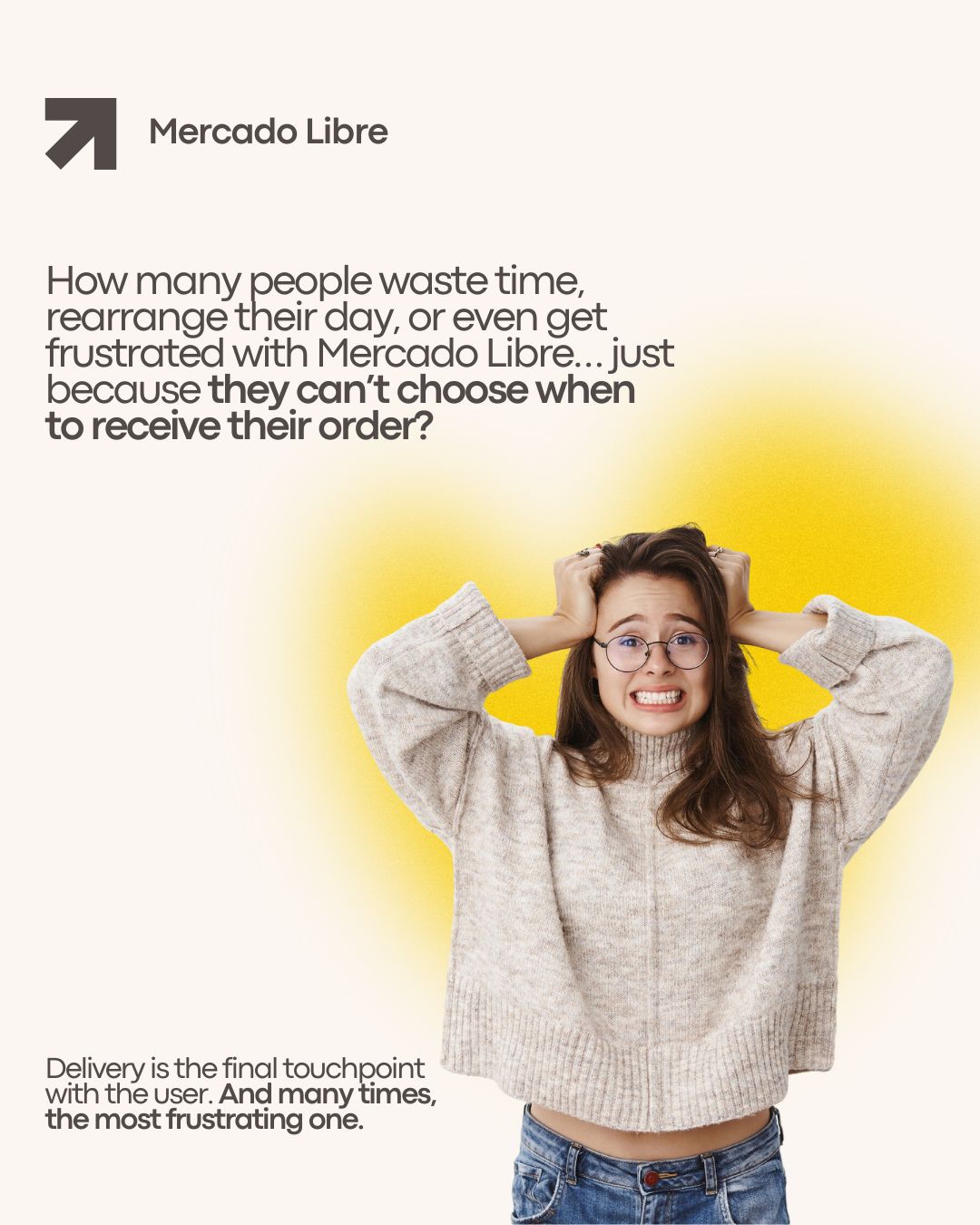
This project introduces Flex Delivery, a new shipping option designed to improve the delivery experience on Mercado Libre. Instead of the traditional all-day delivery window from 9 AM to 9 PM, users can choose between two more precise time frames: morning (8 AM–1 PM) or afternoon (3 PM–8 PM). The system also incorporates proactive notifications that inform users when their delivery is approaching. One hour before arrival, users receive a notification that allows them to confirm the delivery, reschedule it, or authorize someone else to receive the package.

Title
Industry
Date
Challenge
This project introduces Flex Delivery, a new shipping option designed to improve the delivery experience on Mercado Libre. Instead of the traditional all-day delivery window from 9 AM to 9 PM, users can choose between two more precise time frames: morning (8 AM–1 PM) or afternoon (3 PM–8 PM). The system also incorporates proactive notifications that inform users when their delivery is approaching. One hour before arrival, users receive a notification that allows them to confirm the delivery, reschedule it, or authorize someone else to receive the package.
Approach
The project was approached as a UX/UI exploration focused on improving last-mile logistics through better user experience design. The design process centered on identifying one of the most common pain points in online shopping: waiting for deliveries within long and unpredictable time windows. The interface was designed to integrate seamlessly into the existing checkout flow, prioritizing simplicity, clarity, and user autonomy. The visual language maintains Mercado Libre’s brand identity while introducing new components that enhance usability, such as delivery time selection, real-time status updates, and flexible delivery confirmation options. In addition to improving the user experience, the system also supports logistics operations by organizing deliveries into time slots. This structure helps optimize delivery routes, reduce failed delivery attempts, and improve overall operational efficiency.


Projects
Explore more like this one


Selected projects that reflect my approach to design, development, and execution.